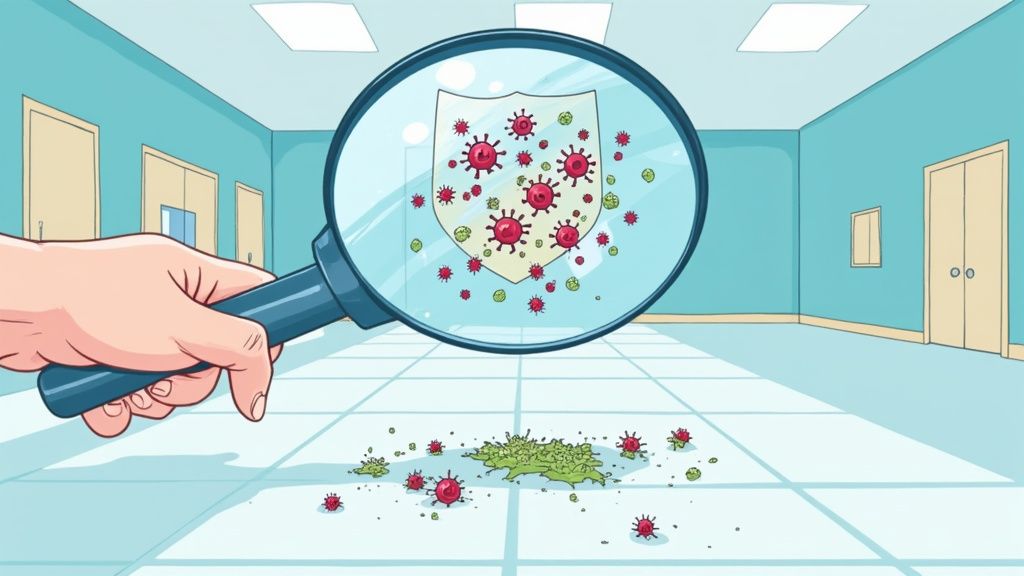
Pseudomonas aeruginosa is a formidable type of disease causing bacteria that thrives in damp, high-traffic environments. For facility managers, janitorial staff, and business owners, understanding this opportunistic pathogen is the first step toward preventing the serious health risks it poses. This guide provides an actionable overview of Pseudomonas aeruginosa, from where it hides to how to effectively eliminate it.
Definition and Overview: What is Pseudomonas aeruginosa?
Pseudomonas aeruginosa is a common, rod-shaped, gram-negative bacterium known for its remarkable adaptability and resilience. It is an opportunistic pathogen, meaning it primarily causes infections in individuals with weakened immune systems or pre-existing health conditions.
One of its most notable traits is its ability to form biofilms—slimy, protective layers that adhere to surfaces. These biofilms act as a shield, making the bacteria highly resistant to both antibiotics and disinfectants. Furthermore, P. aeruginosa is notorious for its intrinsic resistance to many antimicrobial agents, making infections difficult to treat.

Where It’s Commonly Found
Pseudomonas aeruginosa loves moisture. It can be found in soil and water, but in commercial and high-traffic facilities, it colonizes any area that is consistently wet or damp.
Key hotspots include:
- Healthcare Facilities: Sinks, drains, toilets, respiratory equipment (like ventilators), and catheters are prime breeding grounds. Hospitals and long-term care facilities are high-risk zones due to the presence of vulnerable patients.
- Gyms and Spas: Hot tubs, swimming pools, showers, and locker room floors provide the ideal warm, moist environment for this bacterium to flourish.
- Commercial Buildings: HVAC system condensation pans, water fountains, and floor drains in kitchens or restrooms can harbor significant colonies.
- Hospitality: Ice machines, sink faucets, and decorative water features in hotels and restaurants are also potential sources of contamination.
Health Risks Associated with Pseudomonas aeruginosa
While generally harmless to healthy individuals, P. aeruginosa can cause severe and sometimes life-threatening infections in susceptible people. Transmission typically occurs through contact with contaminated water, surfaces, or medical equipment.
Common infections include:
- Hospital-Acquired Infections: It is a leading cause of pneumonia (especially in ventilated patients), urinary tract infections (UTIs), and bloodstream infections.
- Skin Infections: In gyms and spas, it can cause "hot tub folliculitis," a bumpy red rash, as well as ear and eye infections.
- Wound Infections: It can colonize surgical sites or burn wounds, leading to serious complications and delaying healing.
The rise of multidrug-resistant strains makes these infections particularly dangerous. This growing threat of antibiotic resistance underscores why prevention through proper disinfection is so critical. You can learn more about how bacteria develop antibiotic resistance in our detailed guide.

How to Kill or Control It
Controlling Pseudomonas aeruginosa requires a diligent and targeted approach, especially given its ability to form protective biofilms.
1. Choose the Right Disinfectant:
Use an EPA-registered disinfectant that is specifically proven to be effective against Pseudomonas aeruginosa. Check the product label for this claim. Disinfectant wipes are an excellent choice for high-touch surfaces, as they come pre-saturated with the correct chemical concentration.
2. Clean Before Disinfecting:
Always start by cleaning the surface with soap or detergent and water. This removes physical dirt and grime that can shield the bacteria from the disinfectant. This step is crucial for breaking down the outer layer of biofilms.
3. Respect the Dwell Time:
Dwell time is the amount of time a disinfectant must remain visibly wet on a surface to kill the targeted pathogens. This is non-negotiable. If the label specifies a 5-minute dwell time for P. aeruginosa, the surface must stay wet for the full 5 minutes. Wiping it dry prematurely will result in failed disinfection.
4. Focus on Moisture Control:
Since this bacterium thrives in water, routine maintenance is key. Regularly clean and disinfect drains, repair leaks promptly, and ensure HVAC systems are properly maintained to prevent moisture buildup.

Who Should Be Concerned?
Specific professional groups must be particularly vigilant about controlling Pseudomonas aeruginosa:
- Healthcare Providers and Environmental Services Staff: Preventing healthcare-associated infections (HAIs) is a top priority. Strict adherence to cleaning protocols for medical equipment and patient rooms is essential.
- Gym and Spa Operators: Protecting members from skin and ear infections requires rigorous daily disinfection of locker rooms, showers, and hot tubs.
- Janitorial and Maintenance Staff: As the first line of defense, these teams need proper training on identifying high-risk moist areas and using disinfectants correctly, including observing dwell times.
- Business Owners and Facility Managers: Ultimately responsible for public safety, managers must implement and enforce effective cleaning protocols to mitigate liability and protect their customers and employees.
Practical Takeaway
The most effective way to combat Pseudomonas aeruginosa is to disrupt its preferred moist environment. Implement a routine disinfection schedule for all drains, faucets, and water-related equipment using an EPA-registered disinfectant. Train staff to always clean before disinfecting and to strictly adhere to the product’s specified dwell time. This proactive approach is the best defense against this resilient, disease causing bacteria.
Leave a Reply