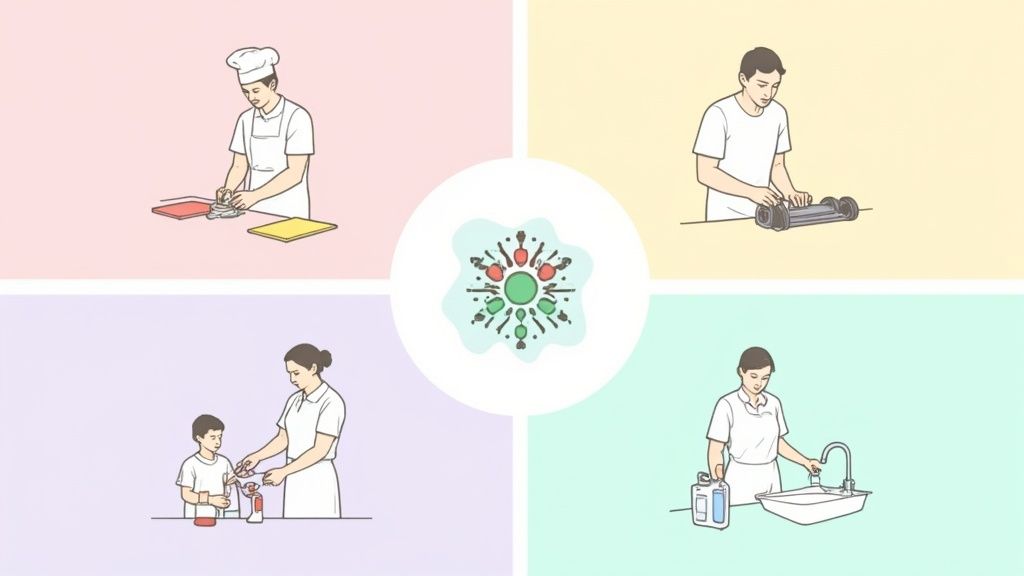
Escherichia coli O157:H7 is a specific strain of bacteria that poses a significant threat in commercial and high-traffic environments, particularly in the food service industry. While most strains of E. coli are harmless and live in the intestines of healthy people and animals, O157:H7 produces a potent toxin that can cause severe illness. Understanding how to prevent its spread is a critical responsibility for anyone involved in food preparation and handling. This guide provides an in-depth look at this pathogen and outlines actionable ways to prevent cross contamination and ensure public safety.
This article will equip food service managers, janitorial staff, and business owners with the knowledge to create a robust defense against this harmful bacterium. Expanding beyond surface and direct contact, effective contamination prevention also involves maintaining clean air environments, and many of the same principles of microbial control apply to both surface and airborne pathogens. For those interested in a deeper look at airborne risks, there are many effective strategies for improving indoor air quality that complement surface-level protocols.
What is E. coli O157:H7?
Escherichia coli O157:H7 is a Shiga toxin-producing E. coli (STEC), one of the most well-known types of foodborne pathogens. It is classified as a gram-negative, rod-shaped bacterium. Its defining trait is the production of Shiga toxins, which are powerful substances that damage the lining of the small intestine, leading to severe symptoms. Unlike many other bacteria, E. coli O157:H7 has a very low infectious dose, meaning that ingesting just a small number of the bacteria can cause a serious infection.
Where Is It Commonly Found?
E. coli O157:H7 lives in the intestines of ruminant animals, particularly cattle. As a result, it is most commonly associated with raw or undercooked ground beef. However, its reach extends far beyond a single source. Contamination can occur in various high-traffic environments and through multiple pathways:
- Food Service: Commercial kitchens, restaurants, and cafeterias are high-risk areas. The bacteria can be found on raw meat, unpasteurized milk and juices, and fresh produce like lettuce and sprouts that have been contaminated by animal waste runoff.
- Farms and Petting Zoos: Direct contact with infected animals or their environments can lead to transmission.
- Water Sources: Contaminated water, including swimming pools, lakes, or private wells, can also be a source of outbreaks.
- Surfaces: Cutting boards, knives, countertops, and hands can become contaminated after contact with raw meat, spreading the bacteria to other foods and surfaces.
Health Risks of E. coli O157:H7 Infection
Infection with E. coli O157:H7 can lead to severe health consequences. Transmission occurs through the fecal-oral route, typically by ingesting contaminated food or water.
Symptoms usually appear within 3-4 days and include severe stomach cramps, diarrhea (often bloody), and vomiting. While most people recover within a week, some—especially young children and older adults—can develop a life-threatening complication called hemolytic uremic syndrome (HUS). HUS is a condition where red blood cells are destroyed and the kidneys fail, requiring hospitalization, kidney dialysis, and sometimes a kidney transplant. Given these severe risks, preventing initial contamination is paramount.
How to Kill and Control E. coli O157:H7
Controlling E. coli O157:H7 relies on a multi-layered approach focused on preventing cross contamination and eliminating the pathogen through proper cooking and sanitation. This is not just a matter of basic cleanliness but a fundamental practice in risk management.
Key Control Measures:
- Thorough Cooking: The most effective way to kill E. coli O157:H7 is by cooking food, especially ground beef, to a safe internal temperature. The USDA recommends cooking ground beef to at least 160°F (71°C). A food thermometer is the only reliable way to ensure this temperature is reached.
- Proper Cleaning and Sanitization: Surfaces and equipment must be cleaned and sanitized rigorously. Use an EPA-registered disinfectant proven effective against E. coli. Always follow the manufacturer’s instructions for dwell time—the period the surface must remain visibly wet to ensure the disinfectant kills the bacteria. For more on this, our restaurant kitchen cleaning checklist provides a structured guide.
- Preventing Cross-Contamination:
- Separate Raw and Cooked Foods: Use different cutting boards, plates, and utensils for raw and cooked foods. Color-coded systems are highly effective.
- Handwashing: Wash hands thoroughly with soap and warm water for at least 20 seconds after handling raw meat, using the bathroom, or before preparing food. You can learn more about Choosing the Right Hand Washing Station for Your Business.
- Safe Food Storage: Store raw meat on the bottom shelf of the refrigerator in sealed containers to prevent juices from dripping onto other foods.
Who Should Be Concerned?
While everyone should be aware of E. coli O157:H7, certain professionals have a heightened responsibility to prevent its spread:
- Food Service Managers and Staff: They are on the front lines of food safety. Implementing and enforcing strict hygiene, cooking, and sanitation protocols is essential. Proper restaurant food safety training is non-negotiable.
- Business Owners: Owners of restaurants, grocery stores, and food processing plants are legally and ethically responsible for providing safe food. This includes investing in proper equipment, training, and systems like HACCP. For more, see our guide on understanding HACCP critical control points.
- Janitorial and Sanitation Crews: These teams are crucial for cleaning and disinfecting surfaces in high-traffic areas like restrooms and dining halls where bacteria can spread.
Practical Takeaway and Hygiene Recommendation
The most critical takeaway for preventing E. coli O157:H7 infections is the unwavering commitment to separation and sanitation. Never allow raw meat or its juices to contact ready-to-eat foods. Clean and sanitize any surface that touches raw meat immediately and thoroughly. Always wash your hands before, during, and after food preparation. By treating every raw meat product as a potential source of contamination and adhering to strict safety protocols, you can effectively protect your customers, your staff, and your business from this dangerous pathogen. Combining these practices with a modern restaurant inventory management system can further enhance safety by ensuring ingredients are fresh and properly tracked.
Leave a Reply