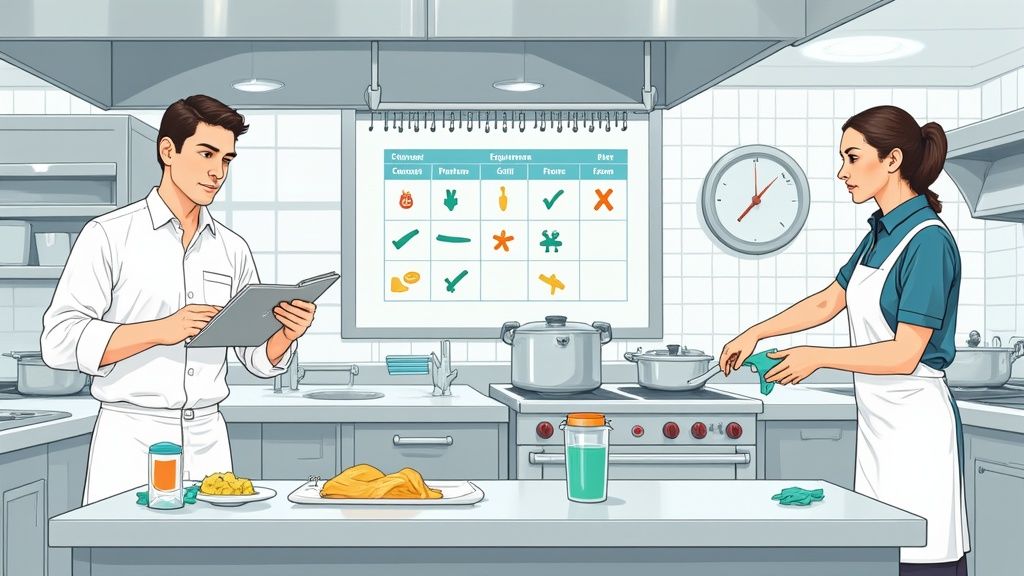
In the high-stakes environment of a commercial kitchen, food safety is paramount. While numerous pathogens pose a threat, one of the most notorious is Escherichia coli O157:H7. Understanding this specific bacterium—where it thrives, the risks it presents, and how to eliminate it—is a non-negotiable responsibility for any food service manager. A meticulously followed restaurant cleaning schedule template is not just a best practice; it is your primary defense against an outbreak that could jeopardize public health and your establishment's reputation. This guide provides an actionable overview for restaurant owners and managers on controlling this significant foodborne threat.
What is Escherichia coli O157:H7?
Escherichia coli (often abbreviated as E. coli) is a large and diverse group of bacteria. While most strains of E. coli are harmless inhabitants of the intestines of healthy humans and animals, some are pathogenic, meaning they can cause illness.
E. coli O157:H7 is a particularly virulent strain that produces a powerful toxin called Shiga toxin. This toxin can cause severe illness, including hemorrhagic colitis (bloody diarrhea) and, in some cases, a life-threatening complication known as hemolytic uremic syndrome (HUS), which can lead to kidney failure. Its ability to cause severe disease even from a very small number of bacteria makes it a critical concern in any food handling environment.
Where is E. coli O157:H7 Commonly Found in a Restaurant?
E. coli O157:H7 lives in the intestines of cattle and other ruminant animals. It is primarily transmitted through the consumption of contaminated food or water. In a restaurant setting, the highest risk areas and sources include:
- Raw and Undercooked Ground Beef: This is the most common source of E. coli O157:H7 outbreaks. Grinding meat can transfer bacteria from the surface of the beef to the interior.
- Contaminated Produce: Leafy greens (like lettuce and spinach), sprouts, and other fresh produce can become contaminated if they come into contact with water containing animal feces.
- Cross-Contamination: This is a major risk factor. The bacteria can easily spread from raw meat to other foods, surfaces, and equipment. Key cross-contamination points include:
- Cutting boards and utensils used for both raw meat and ready-to-eat foods.
- Food handler's hands that are not washed properly after handling raw ground beef.
- Kitchen towels and sponges used to wipe down contaminated surfaces.
- Unpasteurized Milk and Juices: These products can also carry the bacteria if not properly treated.
Health Risks and Transmission
Transmission of E. coli O157:H7 occurs via the fecal-oral route. This means a person must swallow the bacteria to become ill. In a restaurant, this can happen by eating food contaminated with the pathogen.
The health risks are significant:
- Infection: Symptoms typically appear 3-4 days after exposure and include severe stomach cramps, diarrhea (often bloody), and vomiting.
- Hemolytic Uremic Syndrome (HUS): About 5-10% of people with an E. coli O157:H7 infection develop HUS. This is most common in young children and the elderly and can be fatal.
- High Virulence: Ingesting as few as 10 bacterial cells can be enough to cause a serious infection, making even minor contamination events dangerous.
How to Kill and Control E. coli O157:H7
Controlling E. coli O157:H7 relies on a two-pronged approach: preventing contamination and killing any bacteria that may be present. This is where a detailed restaurant cleaning schedule template becomes indispensable.
- Thorough Cooking: Cook ground beef to an internal temperature of at least 160°F (71°C), verified with a food thermometer. This is the most effective way to kill the bacteria in meat.
- Strict Cleaning and Sanitation:
- Use EPA-Registered Disinfectants: Use sanitizers and disinfectants that are approved by the EPA as effective against E. coli. For food contact surfaces, a food-safe sanitizer is required.
- Respect Dwell Times: Disinfectants need a specific amount of contact time (dwell time) to be effective. This is often several minutes. Wiping a surface and immediately drying it will not kill the pathogens. The dwell time will be listed on the product label and must be followed.
- Clean and Sanitize Surfaces: All food contact surfaces, such as prep counters, cutting boards, and meat slicers, must be cleaned and sanitized after each use, especially after contact with raw meat. A robust restaurant kitchen cleaning checklist should detail these steps.
- Prevent Cross-Contamination:
- Use separate cutting boards, utensils, and plates for raw meat and ready-to-eat foods like vegetables.
- Implement rigorous handwashing policies for all staff after handling raw meat, using the restroom, or any other activity that could contaminate hands.
- Proper Produce Handling: Wash fresh fruits and vegetables thoroughly under running water before preparation.
Who Should Be Concerned?
Restaurant Owners and Managers are on the front line. They are legally and ethically responsible for implementing food safety protocols, training staff, and ensuring compliance. An outbreak can lead to lawsuits, fines, closure, and irreparable brand damage.
Kitchen Staff and Chefs are directly responsible for executing these safety procedures daily. Their diligence in cooking, cleaning, and preventing cross-contamination is critical to protecting public health.
Janitorial Staff must be trained on the proper use of disinfectants, including correct dilution and dwell times, for non-food contact surfaces in dining areas and restrooms to prevent broader environmental contamination.
Practical Takeaway
The fight against E. coli O157:H7 is won through diligence and procedure. Your most powerful tool is a comprehensive restaurant cleaning schedule template that is rigorously followed, monitored, and reinforced through continuous staff training. Treat every raw ground beef product as a potential source of contamination and build your cleaning, sanitation, and food handling processes around this principle. This proactive, prevention-focused mindset is the key to keeping your customers safe and your business secure.
Leave a Reply